In a previous post, I examined the U.S. communities with the highest concentrations of residents reporting Greek ancestry. The above post focused on ancestry, a measure that includes both immigrants from Greece and their descendants.
The present post examines a different, but related, question: Where do people born in Greece live today?
Using data from the U.S. Census Bureau’s American Community Survey (ACS), this analysis identifies the twenty places in the U.S. with the largest Greece-born populations in 2024 and examines which communities experienced the largest increases and decreases since 2010.
Nationally, the estimated Greece-born population declined from about 120,969 in 2010 to approximately 94,168 in 2024 ACS, a decrease of roughly 22 percent. Although the overall population became smaller during this period, local regional patterns varied noticeably.
The Largest Greece-Born Communities
Table 1 presents the twenty U.S. places with the largest Greece-born populations in 2024.
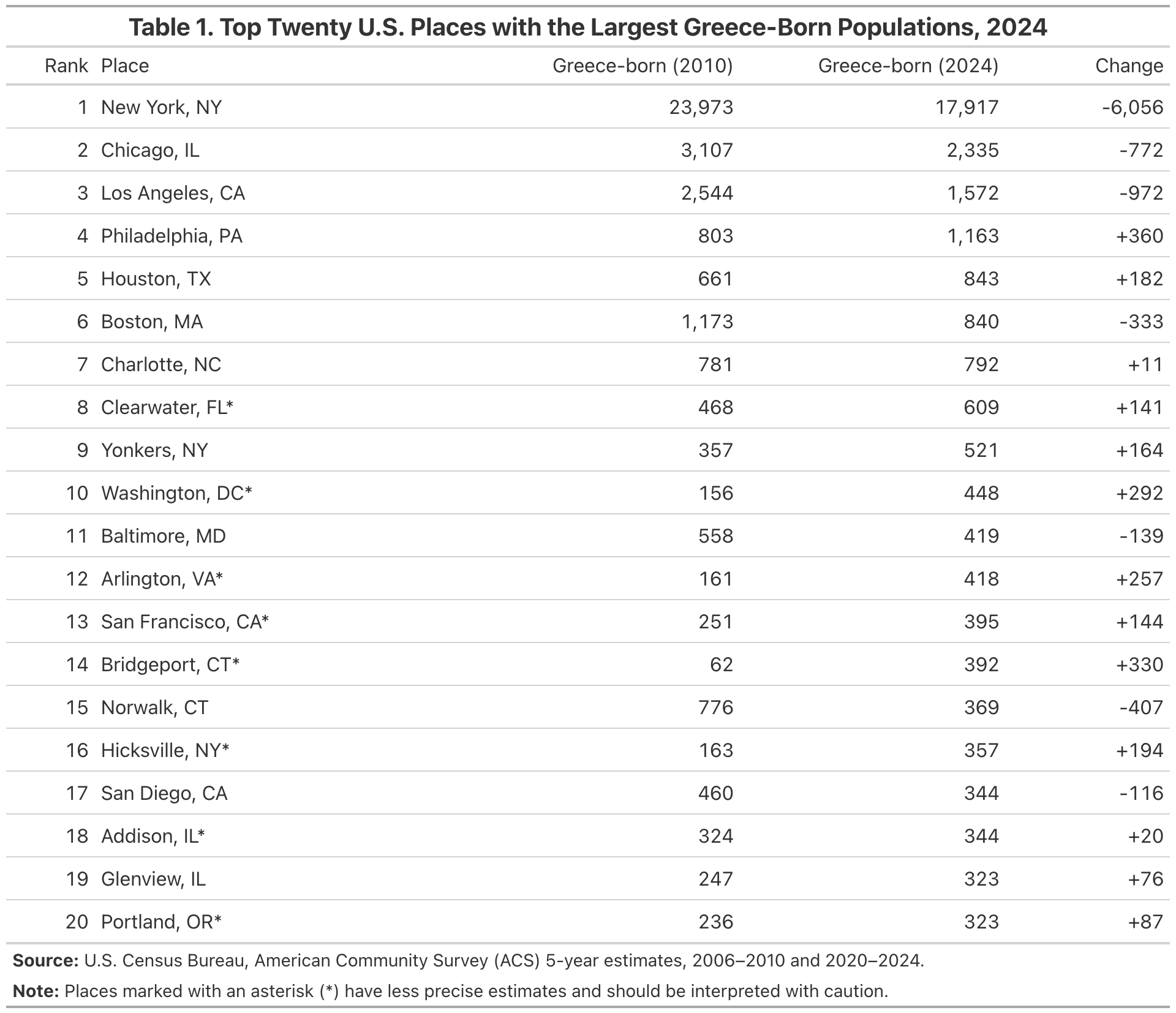
Table 1: Top Twenty U.S. Places with the Largest Greece-Born Populations, 2024
New York remains the nation’s largest Greece-born community by a wide margin, with an estimated 17,917 people born in Greece. Chicago ranks second with 2,335, followed by Los Angeles (1,572) and Philadelphia (1,163). Houston, Boston, Charlotte, Clearwater, Yonkers, and Washington, D.C. round out the top ten.
The remainder of the list includes places located across several regions of the country, including California, Connecticut, Illinois, New York, Oregon, and Virginia. Together, these twenty places provide a snapshot of where the largest Greece-born populations are located in the United States today.
Communities with the Largest Increases
Although the national Greece-born population declined overall, some communities experienced increases between 2010 and 2024.
Table 2 ranks the 20 places with the largest estimated increases between 2010 and 2024.
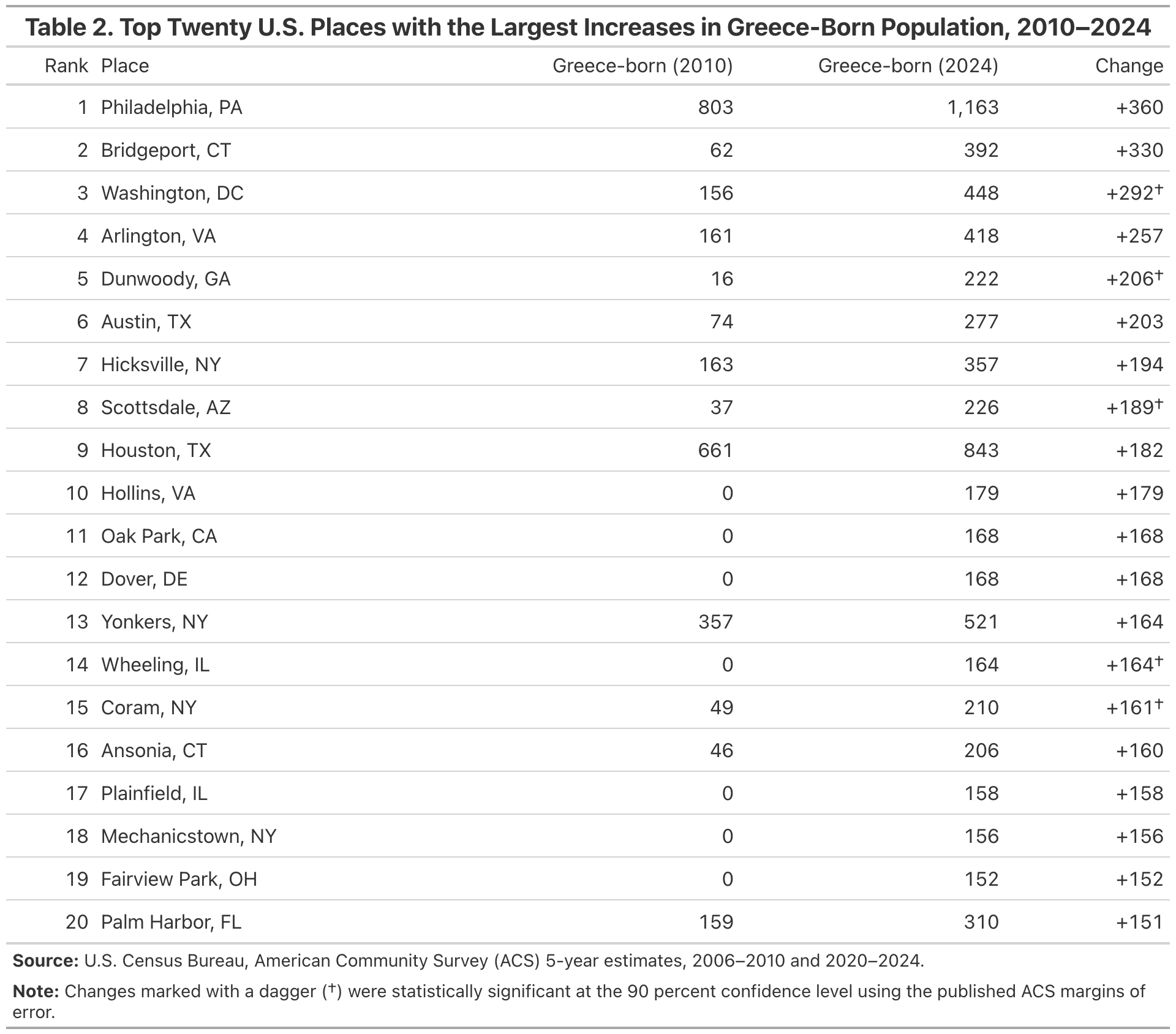
Table 2: Top Twenty U.S. Places with the Largest Increases in Greece-Born Population, 2010-2024
Philadelphia recorded the largest estimated increase, adding approximately 360 Greece-born residents. Bridgeport, Connecticut (+330), Washington, D.C. (+292), Arlington, Virginia (+257), and Dunwoody, Georgia (+206) also recorded relatively large gains.
Several communities on this list had relatively small Greece-born populations in the 2006–2010 ACS, while others experienced growth from established Greece-born populations.
Because the ACS is a sample survey, observed changes should be interpreted together with their margins of error. Of the twenty largest estimated increases shown in Table 2, five were statistically significant at the 90 percent confidence level (indicated by a dagger †).
Communities with the Largest Decreases
Table 3 presents the twenty places with the largest estimated declines.
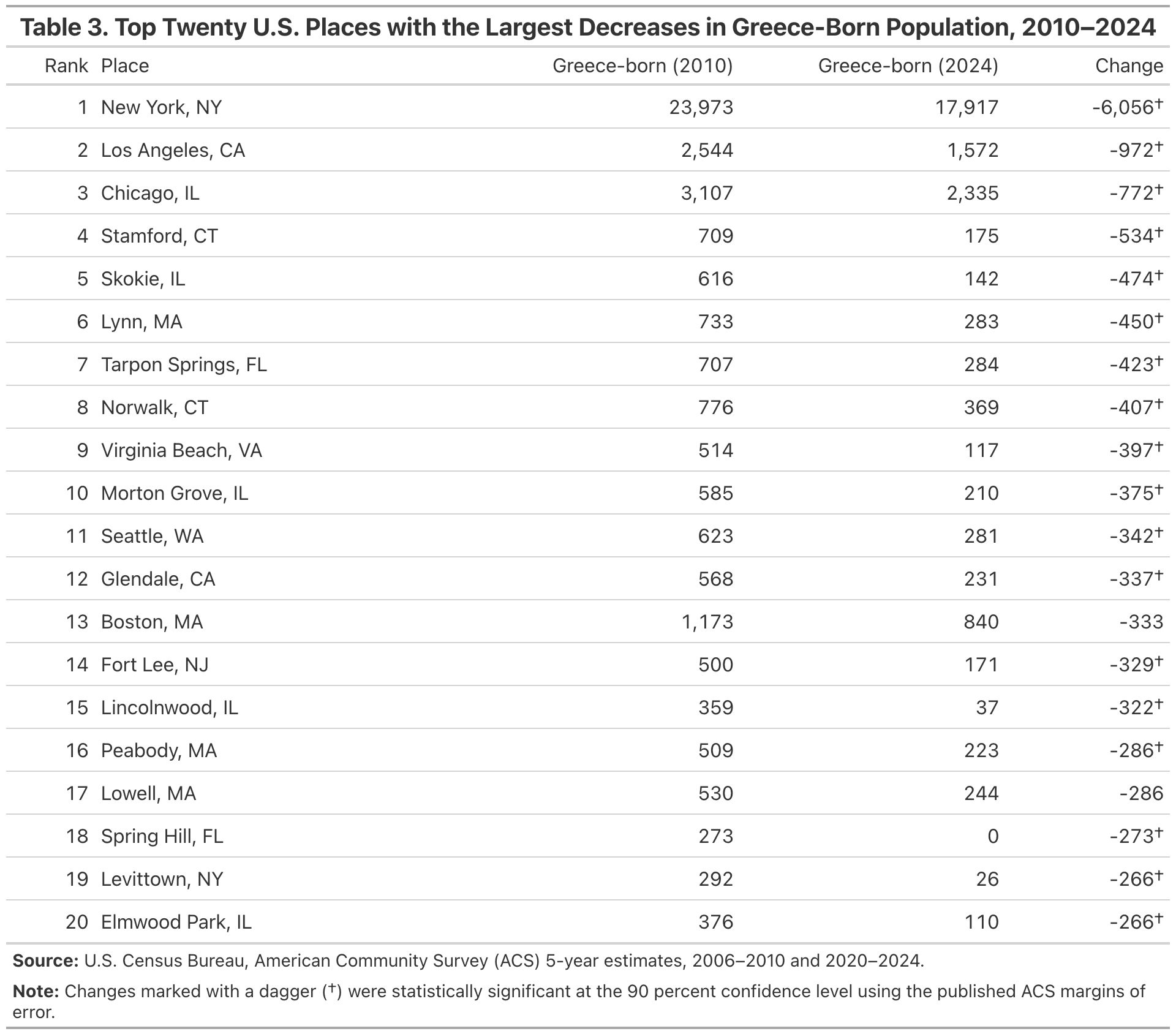
Table 3: Top Twenty U.S. with the Largest Decreases in Greece-Born Population, 2010-2024.
New York experienced the largest decrease, with an estimated decline of 6,056 people born in Greece. Los Angeles (-972), Chicago (-772), Stamford, Connecticut (-534), and Skokie, Illinois (-474) also recorded estimated decreases.
Many of the places with the largest estimated declines are long-established Greek-American communities. Eighteen of the twenty largest estimated decreases were statistically significant at the 90 percent confidence level.
Data Notes
This post uses data from the U.S. Census Bureau’s American Community Survey (ACS) 5-year estimates for 2006–2010 and 2020–2024. Birthplace data identify people who were born in Greece and currently live in the United States. Because the ACS is based on a sample rather than a complete count of the population, all estimates contain some uncertainty. Places marked with an asterisk (*) in Table 1 should be interpreted with caution because their estimates are less precise. In Tables 2 and 3, a dagger (†) indicates that the observed increase or decrease was large enough that it is unlikely to be due to sampling variation alone.