A look at the occupations of Greece-born workers using the latest available five-year American Community Survey data.
Greek immigrants have long been part of the American workforce. Restaurants such as diners and other small businesses are often associated with the Greek-American experience, but what do the data tell us about the occupations of people born in Greece who are working in the United States today?
This article looks at the occupations of employed people born in Greece who live in the United States, using data from the 2024 American Community Survey (ACS) five-year sample (2020–2024).
The findings show that Greece-born workers are employed across a wide range of occupations, from management and education to food service, healthcare, construction, and transportation.
Where Do Greece-Born Workers Work?
Figure 1 (below) groups individual occupations into 13 broad categories to provide an overview of the kinds of work employed Greece-born people do in the United States. Figure 2 provides more detail by showing the 20 most common individual occupations.
Management, business, and financial occupations account for the largest share, at 21.2%. In other words, roughly one in five employed Greece-born individuals works in this occupational group.
The second-largest category is education, legal, community service, arts, and media, accounting for 13.1% of employed Greece-born workers.
Other major occupational groups include:
· Production, transportation, and material moving: 10.2%
· Computer, engineering, and science: 10.0%
· Sales: 8.9%
· Food preparation and serving: 7.7%
· Office and administrative support: 7.4%
· Natural resources, construction, and maintenance: 7.0%
· Healthcare practitioners and technical occupations: 5.7%
Smaller shares work in building cleaning and grounds maintenance (2.6%), healthcare support (2.6%), personal care and service (2.1%), and protective service occupations (1.4%).
These findings illustrate the occupational diversity of Greece-born workers.
While food service remains an important source of employment, it represents less than 8% of the total. Management, education-related occupations, and technical fields also account for substantial shares.
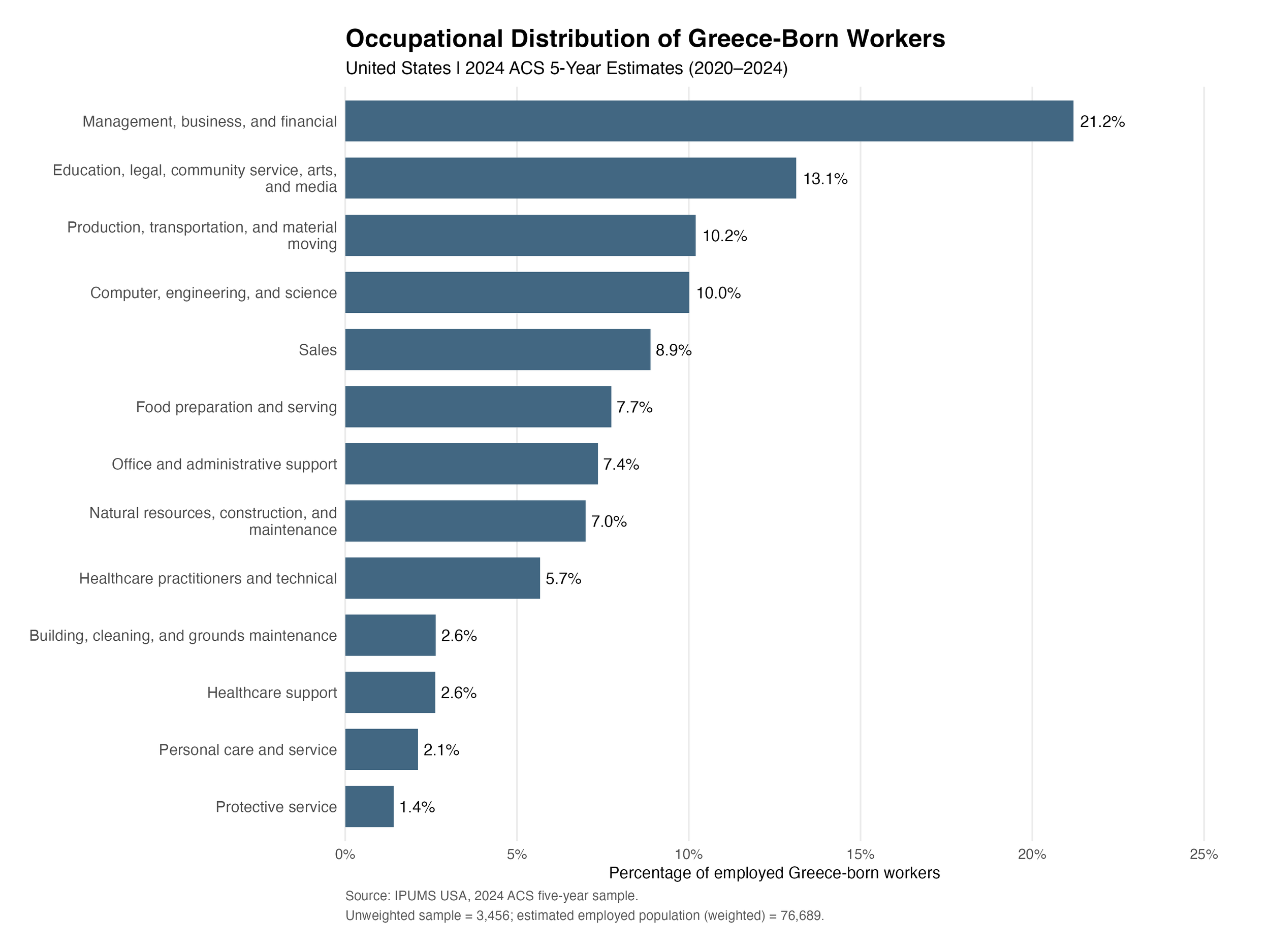
Figure 1. Occupational distribution of Greece-born workers
What Are the 20 Most Common Occupations?
Figure 2 (below) takes a closer look at specific occupations rather than broad occupational groups.
Interestingly, postsecondary teachers are the single most common occupation among employed Greece-born individuals, accounting for approximately 3.7% of workers.
They are followed by:
· Other managers: 3.3%
· Cooks: 3.0%
· Food service managers: 2.9%
· Driver/sales workers and truck drivers: 2.4%
· Software developers: 2.2%
· Chief executives and legislators: 2.0%
The next three occupations are first-line supervisors of retail sales workers (1.9%), retail salespersons (1.8%), and physicians (1.7%).
The remaining occupations in the top 20 include waiters and waitresses, janitors and building cleaners, customer service representatives, elementary and middle school teachers, secretaries and administrative assistants, cashiers, legal professionals, construction laborers, financial managers, and registered nurses.
An important point is that no single occupation accounts for more than 4% of employed Greece-born workers. Even postsecondary teachers, the largest individual occupation, represent a relatively small share of the total.
This suggests that Greece-born workers are spread across many different occupations rather than concentrated in just one or two.
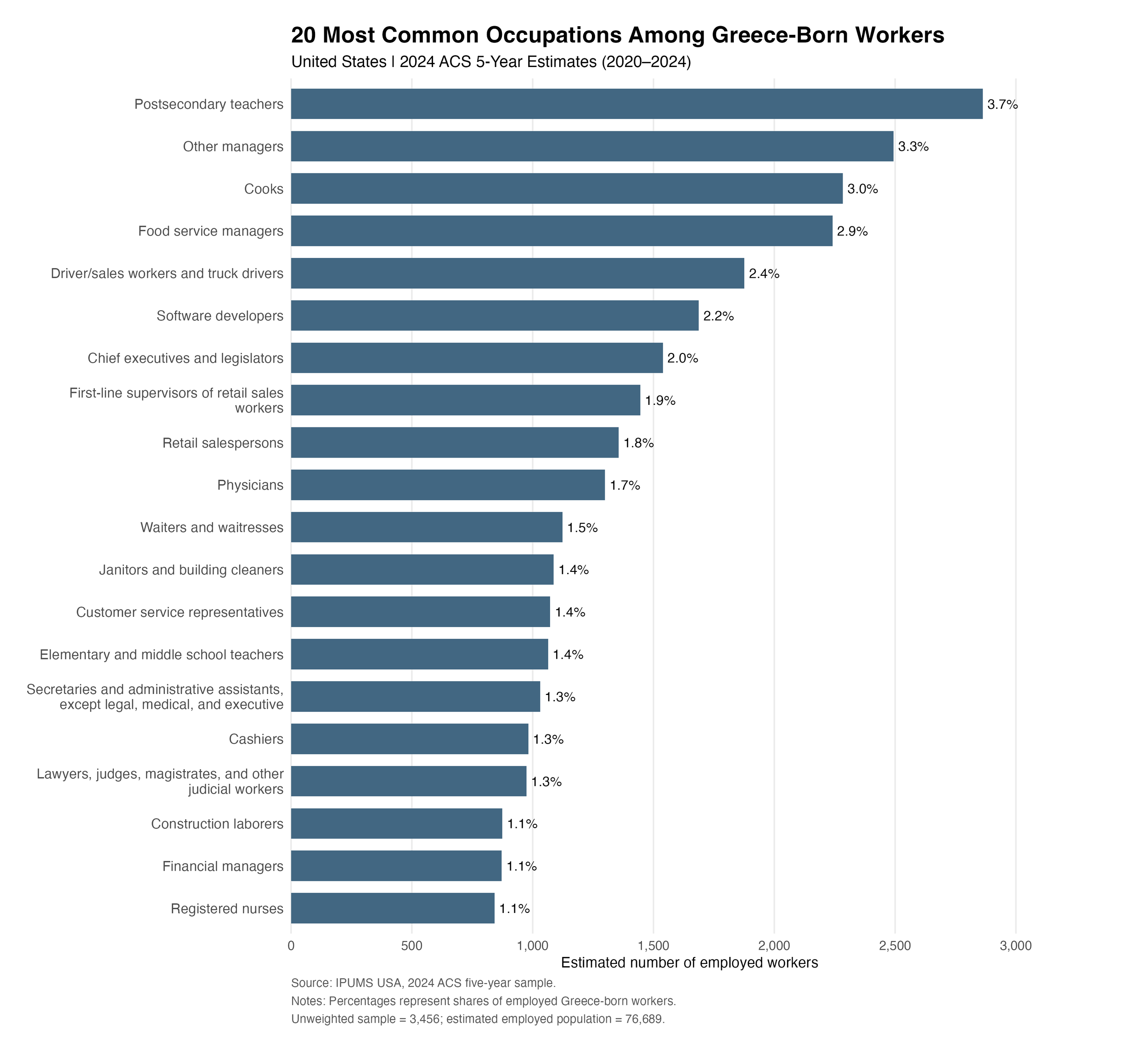
Figure 2. The 20 most common occupations among Greece-born workers
Beyond Restaurants
Restaurants have long been part of the Greek immigrant experience in the United States. Food-related jobs remain important: cooks account for 3.0% of employed Greece-born workers, and food service managers account for 2.9%. Waiters and waitresses also rank among the 20 most common occupations.
Greece-born workers also work in many other fields, including management, education, technology, and healthcare.
It should be noted, though, that these figures describe the work people do, not whether they own a business or work for someone else. For example, a food service manager may or may not own the restaurant.
What Do These Numbers Tell Us?
Three findings stand out. Management, business, and financial occupations form the largest broad occupational group. Postsecondary teachers are the most common individual occupation, but account for fewer than 4% of workers. Overall, Greece-born workers hold a wide range of professional, technical, service, sales, and manual jobs.
Future analysis could examine how occupations differ by education, e, gender, age, or time spent in the country.
Please note that figures alone do not show whether Greece-born workers are more or less likely than other groups to hold particular jobs. That would require a comparison with those groups.
Overall, the results show that Greece-born workers hold many kinds of jobs beyond those traditionally associated with Greek immigration.